
 EN
EN

Temperature and humidity control represents one of the most critical aspects of achieving professional-quality paint finishes in automotive and industrial applications. When operating a paint spray booth, maintaining precise environmental conditions directly impacts paint adhesion, finish quality, drying times, and overall operational efficiency. Professional painters and facility managers understand that even minor variations in temperature or humidity can result in costly defects, rework, and compromised coating performance that affects both appearance and durability.
Modern painting operations require sophisticated environmental control systems to ensure consistent results across different seasons and weather conditions. The interaction between temperature, humidity, and paint chemistry creates complex dynamics that must be carefully managed to prevent issues such as blushing, orange peel, runs, sags, and poor adhesion. Understanding these relationships enables operators to optimize their spray booth performance and deliver superior coating results that meet or exceed industry standards.
The Science Behind Temperature Control in Paint Application
Paint Viscosity and Flow Characteristics
Temperature directly influences paint viscosity, which affects how smoothly the coating flows and levels on the substrate surface. As temperatures increase, paint becomes thinner and flows more readily, potentially leading to runs and sags if not properly controlled. Conversely, cooler temperatures increase viscosity, making the paint thicker and more difficult to atomize effectively through spray equipment. This relationship requires precise temperature management to maintain optimal paint consistency throughout the application process.
Professional spray booth operators typically maintain temperatures between 65-75°F (18-24°C) to achieve ideal paint flow characteristics. Within this range, most automotive and industrial coatings exhibit proper viscosity for effective atomization and smooth application. Temperature fluctuations outside this optimal range can necessitate paint thinning adjustments or equipment modifications, increasing complexity and potential for operator error.
Solvent Evaporation Rates and Flash Times
The rate at which solvents evaporate from wet paint films depends heavily on ambient temperature conditions within the spray booth environment. Higher temperatures accelerate solvent evaporation, potentially causing the paint surface to skin over before underlying layers can properly level and cure. This phenomenon, known as dry spray or insufficient wet edge time, results in poor flow and leveling characteristics that create texture irregularities and compromised appearance quality.
Controlled temperature environments allow painters to predict and manage flash times more effectively, ensuring adequate working time for proper application techniques. When temperatures are too low, extended flash times can lead to runs, sags, and contamination issues as the wet paint film remains vulnerable to environmental particles and handling damage for extended periods. Optimal temperature control balances these competing factors to achieve consistent, professional results.
Humidity Control and Its Impact on Coating Performance
Moisture Interference with Paint Chemistry
Relative humidity levels significantly affect how water-based and solvent-based coatings cure and develop their final properties. Excessive humidity can interfere with paint chemistry by introducing unwanted moisture into the coating system, potentially causing adhesion problems, gloss reduction, and extended cure times. Water molecules can become trapped within the paint film, creating microscopic defects that compromise both appearance and protective performance.
High humidity conditions are particularly problematic for isocyanate-based coatings, such as two-component urethanes and clearcoats, which react with moisture to form carbon dioxide bubbles within the paint film. These reactions create pinholing, reduced gloss, and weakened coating integrity that can lead to premature failure. Maintaining humidity levels between 40-60% relative humidity helps prevent these moisture-related defects while ensuring proper coating development.
Blushing and Surface Defects Prevention
Blushing represents one of the most common humidity-related defects in spray booth operations, appearing as a milky or cloudy appearance in the dried paint film. This defect occurs when rapid solvent evaporation in high humidity conditions causes localized cooling that precipitates water vapor onto the wet paint surface. The trapped moisture creates light scattering effects that diminish gloss and clarity, particularly noticeable in dark-colored or high-gloss applications.
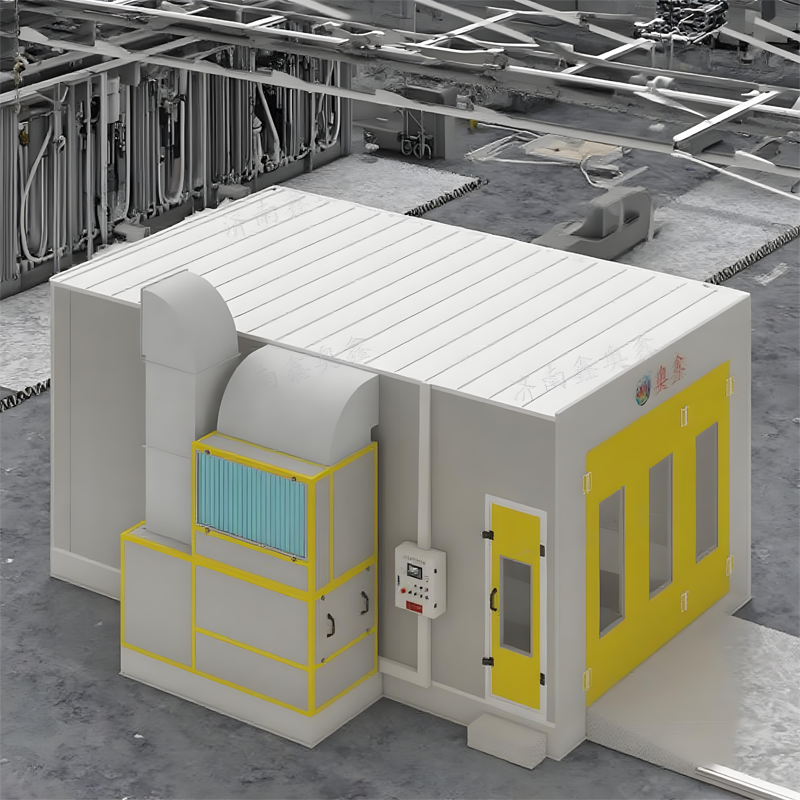
Professional paint spray booth systems incorporate dehumidification equipment to maintain stable moisture levels throughout the painting process. These systems prevent condensation formation on painted surfaces and ensure consistent environmental conditions that support optimal coating development. Proper humidity control eliminates the need for retarder additives that can extend cure times and complicate production schedules.
Energy Efficiency and Operational Cost Considerations
HVAC System Optimization Strategies
Efficient temperature and humidity control requires sophisticated heating, ventilation, and air conditioning systems that balance performance requirements with energy consumption. Modern spray booth designs incorporate heat recovery systems that capture and reuse thermal energy from exhaust air streams, significantly reducing heating costs during cooler months. These systems can recover 60-80% of the heat energy that would otherwise be lost, making temperature control more economically sustainable.
Variable frequency drives and intelligent control systems allow HVAC equipment to adjust operation based on real-time environmental conditions and production demands. This adaptive approach minimizes energy waste while maintaining precise environmental control, reducing operational costs without compromising paint quality. Properly designed systems also incorporate thermal mass considerations to minimize temperature swings and reduce equipment cycling frequency.
Production Efficiency and Throughput Benefits
Consistent environmental control enables more predictable paint application processes that support higher production throughput and reduced rework rates. When temperature and humidity remain stable, operators can maintain consistent spray techniques and timing without adjusting for environmental variations. This consistency reduces the learning curve for new operators and minimizes quality variations that can occur when environmental conditions fluctuate throughout production shifts.
Optimized environmental control also supports faster cure times and reduced booth occupancy periods, allowing more parts to be processed within the same timeframe. Stable conditions enable the use of faster-curing paint systems that might be problematic in uncontrolled environments, further improving production efficiency and reducing work-in-process inventory levels.
Equipment Selection and Maintenance Requirements
Monitoring and Control System Technologies
Advanced spray booth installations utilize digital monitoring systems that continuously track temperature, humidity, and other environmental parameters throughout the painting process. These systems provide real-time data logging and alarm capabilities that alert operators to condition changes before they can affect paint quality. Integrated control systems can automatically adjust HVAC operation to maintain setpoints, reducing operator workload and improving consistency.
Wireless sensor networks enable monitoring of multiple zones within larger spray booth installations, ensuring uniform conditions across the entire work area. Data analytics capabilities help identify trends and optimization opportunities that can improve both quality and efficiency over time. Regular calibration and maintenance of monitoring equipment ensures accurate readings and reliable automated control responses.
Preventive Maintenance for Environmental Control Systems
Regular maintenance of temperature and humidity control equipment prevents unexpected failures that can shut down production and compromise paint quality. Filter replacement schedules must account for local air quality conditions and production volumes to maintain proper airflow and contamination control. Heat exchanger cleaning and inspection prevents efficiency degradation that can increase operating costs and reduce temperature control precision.
Refrigeration system maintenance for dehumidification equipment includes regular refrigerant level checks, coil cleaning, and condensate drain inspection to prevent moisture control problems. Preventive maintenance programs should include seasonal preparation procedures that ensure equipment readiness for changing environmental conditions throughout the year. Documentation of maintenance activities helps identify recurring issues and optimize service intervals for improved reliability.
Industry Standards and Regulatory Compliance
Environmental Regulations and Air Quality Standards
Spray booth environmental control systems must comply with various air quality regulations that govern volatile organic compound emissions and workplace safety standards. Proper temperature control helps optimize paint transfer efficiency, reducing overspray and waste that contributes to environmental emissions. Humidity control prevents coating defects that require rework, further reducing material consumption and emission generation.
Regional air quality management districts often specify requirements for spray booth operation that include environmental monitoring and reporting obligations. Automated data logging systems can simplify compliance documentation while providing evidence of proper environmental control practices. Understanding applicable regulations helps facility managers design and operate spray booth systems that meet both quality and regulatory objectives.
Quality Management System Integration
ISO 9001 and automotive quality standards such as IATF 16949 require documented control of processes that affect product quality, including environmental conditions during paint application. Temperature and humidity monitoring data becomes part of the quality record that demonstrates process control and supports continuous improvement initiatives. Traceability requirements may necessitate correlation between environmental conditions and specific painted parts or production lots.
Statistical process control techniques can be applied to environmental monitoring data to identify trends and establish control limits that prevent quality problems before they occur. Integration with enterprise resource planning systems enables automatic documentation and reporting that reduces administrative burden while ensuring compliance with customer and regulatory requirements.
FAQ
What temperature range should be maintained in a paint spray booth?
The optimal temperature range for most paint spray booth operations is between 65-75°F (18-24°C). This range ensures proper paint viscosity, adequate flash times, and optimal cure characteristics for most automotive and industrial coatings. Temperatures outside this range may require paint formulation adjustments or specialized application techniques to achieve acceptable results.
How does high humidity affect paint quality in spray booths?
High humidity can cause several paint defects including blushing, poor adhesion, extended cure times, and chemical interference in two-component coating systems. Maintaining relative humidity between 40-60% prevents most moisture-related problems while supporting proper coating development. Dehumidification equipment may be necessary in high-humidity climates or during certain seasons.
Can environmental control systems reduce paint booth operating costs?
Yes, properly designed environmental control systems can significantly reduce operating costs through improved energy efficiency, reduced rework rates, and faster production throughput. Heat recovery systems can capture 60-80% of exhaust heat energy, while consistent environmental conditions eliminate defects that require costly rework and material waste.
What maintenance is required for spray booth environmental control equipment?
Regular maintenance includes filter replacement, heat exchanger cleaning, refrigeration system service, and calibration of monitoring equipment. Preventive maintenance schedules should account for local environmental conditions and production volumes. Seasonal preparation procedures ensure equipment readiness for changing weather conditions throughout the year.